
Badges
Mere Christianity–the basics
Mere Christianity
by C. S. Lewis
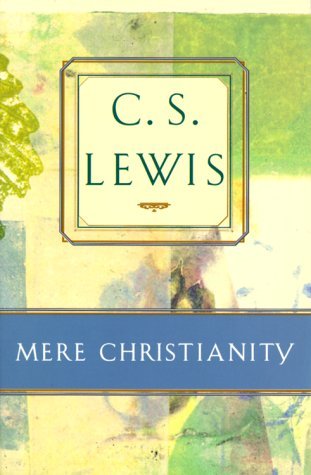
The classic Mere Christianity has been on my bookshelf, probably passed along in my family, for a long time. I’m so glad I added it to my devotional reading this fall. C. S. Lewis, a prolific writer, but perhaps best known to the general public for his Chronicles of Narnia series, was an English literature professor. In his introduction to Mere Christianity, he makes it clear that the intent of this book (originally a series of radio talks) is not to persuade his readers to join a particular denomination of Christianity. Instead, he says, “Ever since I became a Christian I have thought that the best, perhaps the only, service I could do for my unbelieving neighbours was to explain and defend the belief that has been common to nearly all Christians at all times.” He goes back to the basics, what it means to be a follower of Christ, not a follower of a certain religion.
Although C. S. Lewis is esteemed as an academic, he is quite capable of taking theology, which he claims is not his forte, and make it understandable in common language. Mere Christianity is a “must read” for Christians and for those seeking to understand and have a relationship with God.
Rating: 5/5
Category: Christianity, Nonfiction
Notes: Mere Christianity is a compilation of three short books: The Case for Christianity, Christian Behavior, and Beyond Personality.
Publication: 1945—Macmillan
Memorable Lines:
Either this man was, and is, the Son of God: or else a madman or something worse. You can shut Him up for a fool, you can spit at Him and kill Him as a demon; or you can fall at His feet and call Him Lord and God. But let us not come with any patronizing nonsense about His being a great human teacher. He has not left that open to us. He did not intend to.
The worldly man treats certain people kindly because he “likes” them: the Christian, trying to treat every one kindly, finds himself liking more and more people as he goes on—including people he could not even have imagined himself liking at the beginning.
After the first few steps in the Christian life we realize that everything which really needs to be done in our souls can be done only by God.
I, Eliza Hamilton–adequate, but not engaging
I, Eliza Hamilton
by Susan Holloway Scott

I, Eliza Hamilton is a work of historical fiction about the wife of Alexander Hamilton, one of the Founding Fathers of America and the first Secretary of the Treasury under George Washington. He has many other credits including one he wielded ferociously—pamphleteer.
This book only goes as far as Hamilton’s death, but history shows that Eliza had a long life full of ups and downs and important charitable endeavors. She had eight children and passed away at the age of 97.
I had no feelings of affinity to Eliza as described in I, Eliza Hamilton. Most of the book revolved around her love for Hamilton and their courtship. Her family was wealthy. He came from less prosperous and socially acceptable circumstances, but used his intelligence and charm, along with hard work, to make his way in the political and military worlds. According to this book, she adored and trusted Hamilton, even when he was undeserving of the faith she put in him. She spent a lot of time away from her husband because of his career choices.
My book club decided that everyone could choose a version of Eliza Hamilton’s life story. That decision made for a very interesting discussion. Some chose biographies and others historical fiction. My choice, I, Eliza Hamilton, is the kind of book that discourages me from reading historical fiction. I was never quite sure what was accurate and what was the author filling in the gaps and creating characterizations. In our discussion, I learned that biographers debate and disclose certain information that was treated lightly in I, Eliza Hamilton. The author of this book lists resources that supported her writing, but did not specify the fictional and non-fictional aspects of her writing. That omission was disappointing to me.
Rating: 3/5
Category: Historical Fiction
Notes: The book includes discussion questions.
Publication: 2017—Kensington Books
Memorable Lines:
“He must prove himself worthy of your company, and that he is ready to put aside his bachelor’s pursuits for your sake. You are the prize, Eliza, not the colonel, and you must not forget it.”
“The fellow who makes no enemies usually has only boon companions in place of real friends. To have both enemies and friends proves the colonel to be a man of convictions and beliefs. He sounds quite intriguing.”
It was all things I’d heard him say a thousand times before, but to have those same words in print was an entirely different matter. Printed words could not easily be explained away, and the fact that they were reprinted again and again in other papers only increased their power.
Always a Silver Lining–finding the right person
Always a Silver Lining
by Jessica Redland
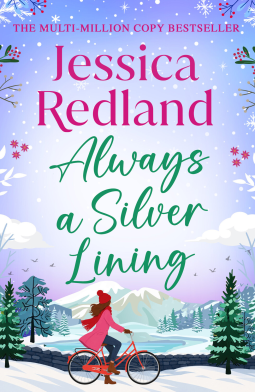
I enjoy Jessica Redland’s intricate plots, descriptions of settings, and complex characters. As the title indicates, Redland writes with positivity, but that doesn’t mean her books are sugar-coated. She writes scenarios that are often difficult for the characters—relationships that are dysfunctional, events that are traumatic, wounds that resist healing. An example is the main character sharing, “I suspected there weren’t many women who could say that they were best friends with their ex-fiancé’s ex-wife.”
In Always a Silver Lining, Juliet is cleverly written into this group of characters that are already connected in many ways—professions, backgrounds, and ties through blood and marriage. It’s enough to make your head swim. The focus, however, is definitely on Juliet, a talented wedding and event planner. She planned her own wedding twice and through very different circumstances, both were canceled. Juliet works hard to find a silver lining to her difficult circumstances. She meets Christian who is quite a bit older, but they connect because of their backgrounds. There are concerns about their families’ reactions. Juliet has a secret she has never told anyone, but decides it is time to open up and share it—with her parents, a close group of friends, and Christian.
I particularly enjoyed the descriptions of the Christmas weddings and other celebrations. There is a special birthday party and a very creative event to advertise a new children’s book. All the characters are likable except one, and he proves himself a cad every time he shows up, which is fortunately not very often.
I received a review copy of this book for free. All opinions expressed are entirely my own.
Rating: 4/5
Category: Fiction, Romance, Women’s Fiction
Notes: 1. #6 in the Escape to the Lakes Series. This could be read as a standalone as the author includes information about previous characters both in a list and as part of the story. I would recommend reading the series from the start as relationships are important in this book, and there are a lot of them!
2. There are a lot of 21st century relationships in this book, especially unmarried couples living together, but it is a clean book with no open-door bedroom scenes or inappropriate language.
Publication: October 19, 2026—Boldwood Books
Memorable Lines:
It’s been a game-changer, acknowledging that bad things have happened but finding the positives from them instead of focusing on the negatives.
They’d been through plenty of tough times but told me that a combination of their love for each other and their faith in God meant they’d been able to face anything thrown their way, always coming out the other side stronger than ever.
No regrets, just silver linings.
Don’t go for good—go for exceptional.
Whistler–a story within a story
Whistler
by Ann Patchett
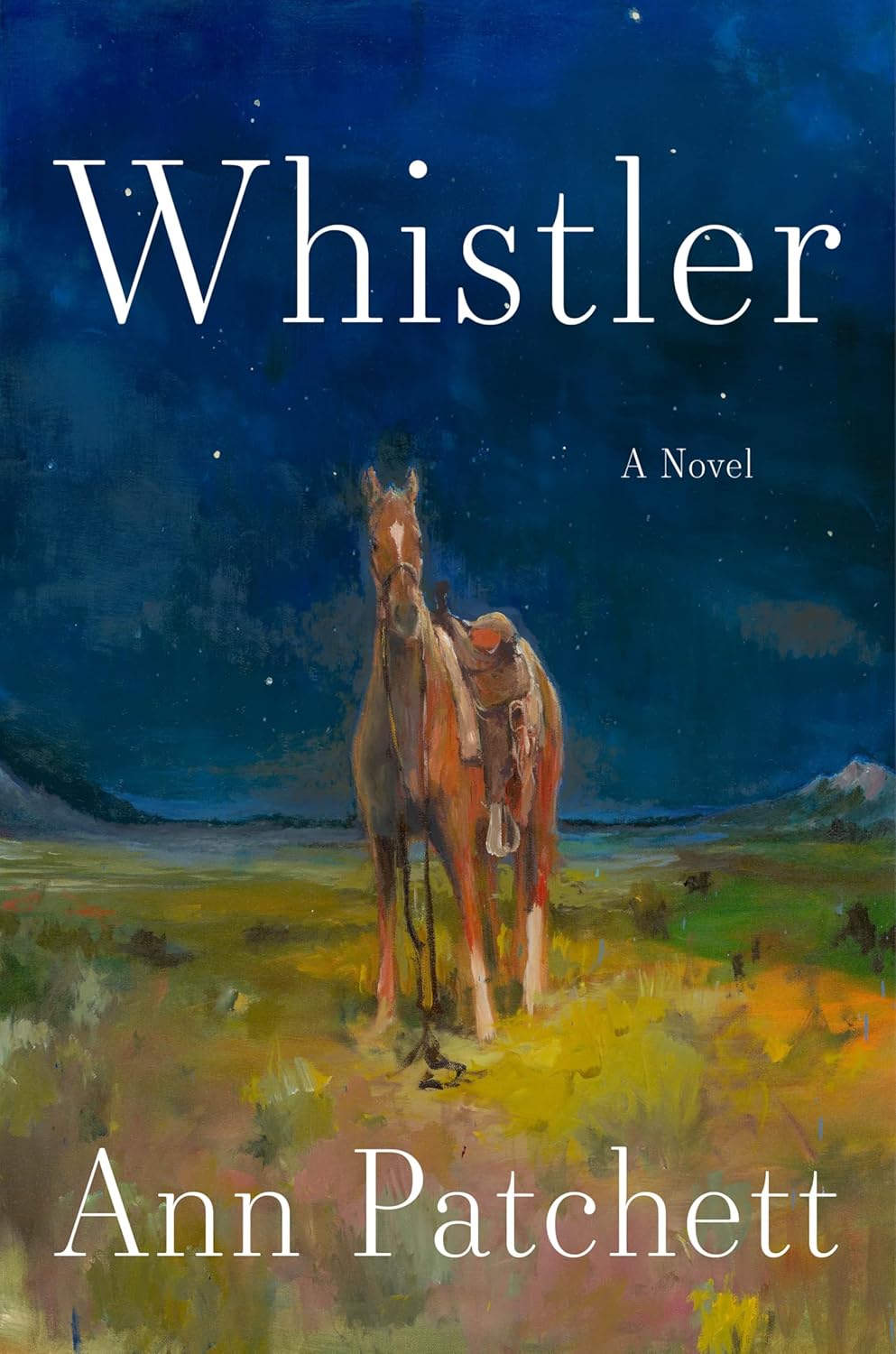
The beautiful cover of Whistler depicts a horse. Whistler’s story is essential to this work of fiction although the horse is not actually a character in the book, which is most definitely character driven. Patchett has created a tale that shows both the dark and the light sides of her characters. Not all of them are likable, but all are lovable—and flawed.
Daphne and her sister Leda are the adult children of their mother Abigail’s first (failed) marriage to Buddy who wanted to be a good parent, but really did not know how to parent and was unhappy in his job. He left the family to return to his parents’ traditional life as a lobster fisherman. He demonstrated his love, not by what he said, but by what he did for the family—showing up to shovel snow, keeping the batteries in the car’s emergency kit up-to-date.
Daphne is married to Jonathan, an older man (70) who is somewhat insecure in Daphne’s love because his first wife died of cancer and because older men are perpetually attracted to Daphne who is only 53. Jonathan has a caring way of showing his love to Daphne, never overburdening her with jealous behavior.
Skip and Polly have been friends to Eddie, Abigail’s second husband, going back to college days. Abigail divorces Eddie after a few years of marriage, and Daphne has always believed it was her fault. Much of this book explores the relationships of these characters and what actually happened to cause Abigail to insist on a divorce.
These connections are an important part of Whistler revealing that people in our past are still a part of us. Polly has achieved the “perfect” life materialistically; but something is still missing, and she works to control the people in her life with “Stay with me.” When those efforts reach a climax, Daphne says of Polly, “I was still undecided as to whether I disliked her intensely or felt terribly sorry for her.”
Patchett’s writing is excellent and filled with little lines, some poignant, some principled, sprinkled throughout the text. In talking about smoking she has Eddie remark, “Children are righteously abstemious where any pleasures not available to them are concerned.” Later, he shares an important decision with Daphne: “I’m never going to be angry at anyone ever again.” Out of all the wonderful writing in this book, my favorite passage is the last page. Don’t rush to read it first, however, as the rest of the book is the background for these wonderful lines.
Rating: 5/5
Category: Fiction
Notes: I enjoyed my discussion of Whistler with my book group and credit many of the ideas in this review to individual members. They added so much to my perspective of this book.
Publication: 2026—Harper Collins
Memorable Lines:
“I wanted him to be in love with me. That’s what I wanted. … It’s an awful business,” she said. “Loving another person.” “It is,” I said, and for the first time in a long time, I remembered that I loved her, or more precisely, I remembered she was a person who had lived her own autonomous life full of mistakes and disappointments and judgments and thwarted love.
How was it that a weekday trip to a museum with my husband had plunged me back into childhood at the age of fifty-three? I knew what Leda would say. She would say it was because childhood never leaves us. We seal the room up and cover it in sheetrock. We dry and sand and paint, but the pocket of history remains and sooner or later someone always winds up tapping on the wall, commenting on the way it sounds strangely hollow in there, and then the whole thing comes tumbling down.
“Your mother and I both have a small shard of glass in our hearts where the other is concerned: her disappointment, my shame, her regret and my regret. This helps to pry it loose. All these years later, you can still pry something loose. There’s no sense carrying shame and regret into the next life.”
The Return of the Prodigal Son: A Story of Homecoming
By Henri J. M. Nouwen
Narrated by Fred Sanders
Jesus told a story, recorded in the New Testament, of a young man who left his home and family for wasteful living. When he ran out of money and friends, he realized he would be better off working as a servant in his father’s house. His decision leads him back to a loving father and a resentful brother. So much has been said in sermons and written in books about the prodigal son that a reader might wonder what could be added to this study. The phrase “the prodigal son” has even become a part of our lexicon.
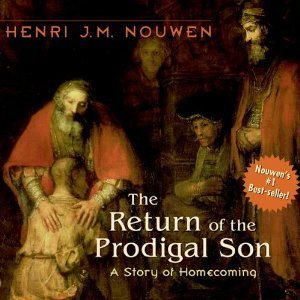
Henri Nouwen has written a masterpiece by combining the original story with a description of his personal journey in which he finds he can identify at various times and circumstances with the prodigal son and the elder brother. He feels called to love like the father in the story. What makes this book unique, besides his style and familiar tone is his long study of Rembrandt’s famous depiction of the family reunion. It began with seeing it on a poster and continues through a specially arranged trip to view at length the original at the Hermitage Museum in St. Petersburg, Russia.
Nouwen brings the reader along in his search for the truths held in the painting and how to apply them to his life. Nouwen’s own story is found in this book through the realism and honesty of his disclosures of personal struggles. As an academic, he taught at several universities, but found his most growth as a child of God during his time as pastor at L’Arche community for disabled persons and their caretakers in Ontario, Canada.
I was immersed in this short book from the beginning, not wanting my time of introspection to end. Fred Sanders narrated the book with kindness and care. I believed I could hear Nouwen’s “voice” spoken through the audio. I recommend this book in any of its formats or many translations. It is good for personal study or would make a nice gift.
Rating: 5/5
Category: Nonfiction, Christian, Religion & Spirituality, Inspirational
Publication: Printed–March 1, 1994—Image
Audio–November 15, 2010—Random House Audio/Audible
Memorable Lines:
Resentment and gratitude cannot coexist, since resentment blocks the perception and experience of life as a gift. My resentment tells me that I don’t receive what I deserve. It always manifests itself in envy.
The leap of faith always means loving without expecting to be loved in return, giving without wanting to receive, inviting without hoping to be invited, holding without asking to be held. And every time I make a little leap, I catch a glimpse of the One who runs out to me and invites me into his joy, the joy in which I can find not only myself, but also my brothers and sisters. Thus the disciplines of trust and gratitude reveal the God who searches for me, burning with desire to take away all my resentments and complaints and to let me sit at his side at the heavenly banquet.
Unlike a fairy tale, the parable provides no happy ending. Instead, it leaves us face to face with one of life’s hardest spiritual choices: to trust or not to trust in God’s all-forgiving love.
If God is compassionate, then certainly those who love God should be compassionate as well.
Not They Who Soar–1904 World Fair
Not They Who Soar
by Amanda Flower
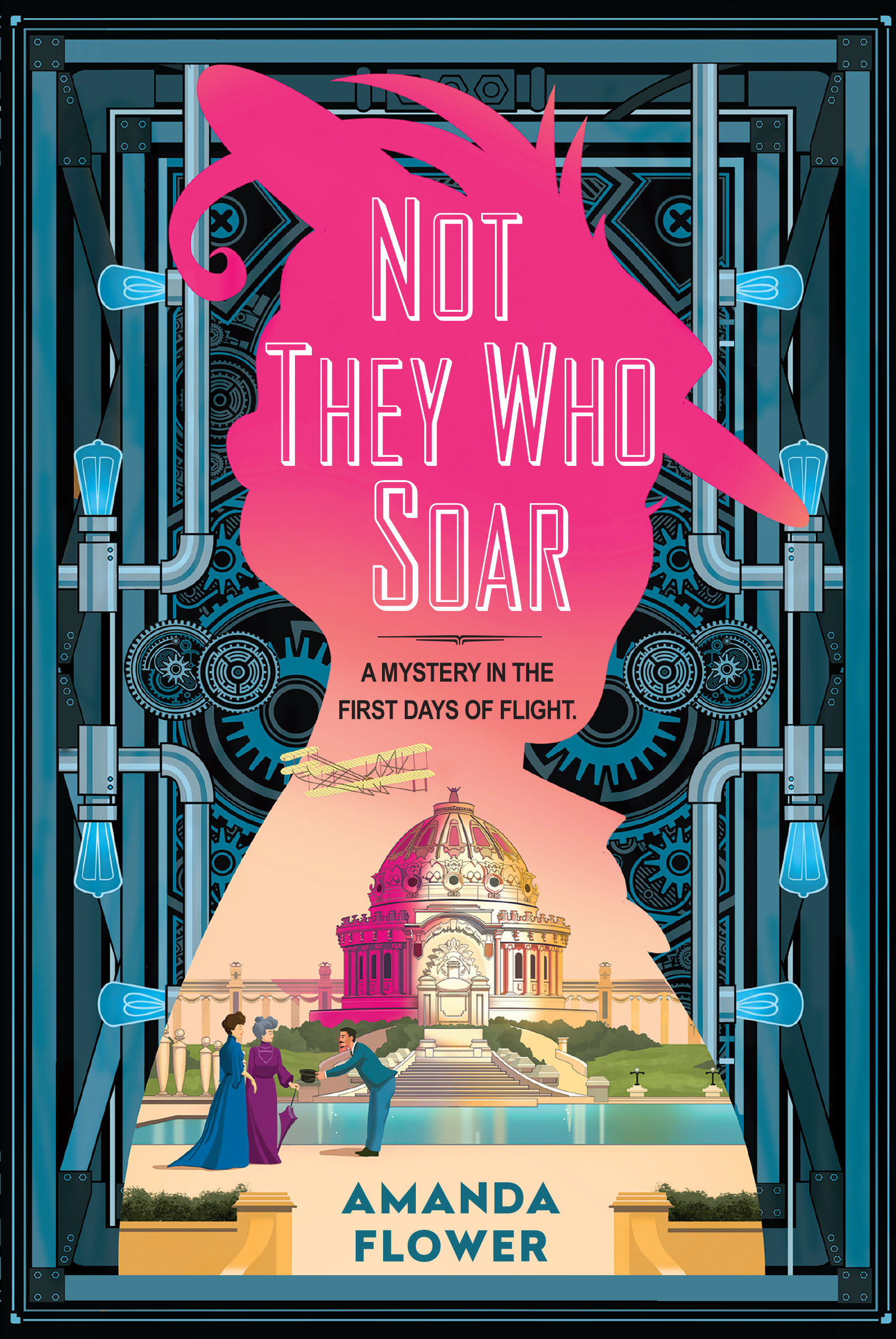
I had high expectations for this series because I have appreciated many books by the author. Sadly, I was disappointed with this second book, Not They Who Soar. I enjoyed the first, To Slip the Bonds of Earth, but this one dragged for most of the book as Katharine Wright was repeatedly insulted by casual comments men made about women, especially concerning their potential in the workplace. While I understand the frustration women of that era must have felt, it just seemed that the author had Katharine wallowing in it. Katharine was college educated in Greek and Latin. While that was an outstanding achievement, and she used her knowledge to teach Latin, she too often relied for her self-esteem on her brothers’ efforts to build a successful flying machine. She also claimed to have a lot of knowledge of flying from being around Orville and Wilbur even though she did not assist them. She managed the house and the business end of their bicycle business and took care of “the boys” (actually grown men) after the death of their mother. I got tired of hearing of her interest in birds and flying because it was their interest.
Another aspect of the plot that bothered me is that Katharine’s trip is in response to the request of her very good friend Margaret who is stressed, but gives no reason for her anxiety. She wants help at the 1904 World Fair. Katharine travels two days by train to get there. Then she is of very little help to her friend who develops a stomach ailment. Time and again she abandons her in pursuit of a mysterious person or persons who ruined an expensive balloon craft that was expected to win an aeronautics competition. Perhaps that same person killed a young female mechanic who kept intercepting Katharine. The main character has a reputation for running into trouble, and she lives up to her image while ruining dresses and then borrowing her friend’s expensive dresses for events.
On a positive note, although the mystery seems to drag its way to a conclusion, there is a very satisfying ending where all the pieces are tied together and motives are sorted out. Villains get their just deserts, Katharine and Margaret have some fun together, and Margaret’s husband is successful in winning new clients. Part of his success is due to Margaret facilitating a business party in the huge Ferris wheel on the fair grounds. There is also a thread about infertility which is not really pursued. In addition, the book explores common attitudes in the U.S. at that time concerning non-western cultures and people. They were included in the fair as exhibits for entertainment, not for expanding cultural awareness.
I received a review copy of this book for free. All opinions expressed are entirely my own.
Rating: 3/5
Category: Historical Fiction, Mystery
Notes: 1. #2 in the Katharine Wright Mystery Series, but could be read as a stand alone.
2. The Author Note gives some background information that explains what is historical in this book and what has been altered for the sake of the story.
Publication: May 27, 2025—Kensington
Memorable Lines:
“Women don’t have interest in mechanics.” He paused. “At least, no respectable woman does. Their focus should be on the home and the children.” I never so badly wanted to pop someone in the mouth as I did in that moment.
“These others were made to come from deserts, small islands, and deep jungles. They were brought here so that people like you can stare at them and watch their primitive, and to some, inferior ways of living. Difference attracts ridicule.”
It seemed there always had to be a dark side, even to a celebration of accomplishments and advancement like the Louisiana Purchase Exposition. It was a sad fact that I would do well to remember.
The Girls of Good Fortune–justice after a massacre
The Girls of Good Fortune
by Kristina McMorris
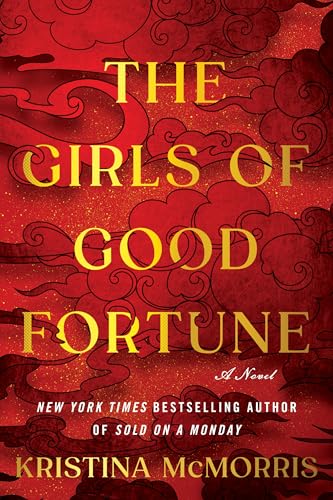
Kristina McMorris has written some real gems of historical fiction. The Girls of Good Fortune is added to her portfolio as a page turner about a massacre of Chinese murderers. The historical focus, however, is not the details of the horrible event, but one daughter’s search for the truth and justice for her father and the others who were brutally slain.
Celia is the daughter of a Chinese man and a white woman. Celia, herself, appears white, but realizes that any in her bloodline could have the physical characteristics of the Chinese. While she is not ashamed of her heritage, she is shamed by members of white society when they are aware of her background. Working as a servant in Portland Mayor Bettencourt’s household in the 1880’s, she falls in love with his son Stephen. Their affair results in a pregnancy which he is not aware of before he ships off to study medicine in England.
The book begins with what seems to be a teaser in 1888 and then switches to 1885. These sudden switches occur several times and make the reader want to pull together the connections that are certainly there. A large part of the book is set in 1888 and has a convoluted plot. Neither Celia nor the reader is sure who is lying. With her daughter’s life at stake, Celia can not afford to make any mistakes or give up.
Although I never identified with Celia, I did sympathize with her dilemma and held my breath a number of times as she found herself in difficult situations—drugged, shanghaied, and imprisoned. At one point escape meant jumping in the dark into the icy ocean, joining a homeless encampment, hopping on moving trains, and disguising herself as a man. Most importantly, I felt for her as she tried to decide which of the other characters she could trust. If you like adventure, would love to abolish prejudice, enjoy historical fiction, and relish a well-written, complicated story, I recommend The Girls of Good Fortune.
I received a review copy of this book for free. All opinions expressed are entirely my own.
Rating: 4/5
Category: Historical Fiction, Multicultural, Women’s Fiction
Notes: 1. Additional information in the book is found in: Author’s Note, Themed Recipes, Reading Group Guide, and A Conversation with the Author.
2. McMorris devotes a section of her blog to this book with wonderful ideas for book clubs.
Publication: May 20, 2025—Sourcebooks Landmark
Memorable Lines:
In the role of mayor, he used to be driven by a desire to serve—a key word he’d often cited—and improve the lives of others, those of Chinese heritage included. But he’d since become consumed with climbing the political ladder, not caring who was stepped on during the ascent. How many injustices, how many slain immigrants, would it take?
She recognized more than ever: the stories people tell, to themselves above all, were often what kept them going. When looking back on life, really, who was anyone without them?
Half Broke Horses–stories of ranching
Half Broke Horses
by Jeannette Walls
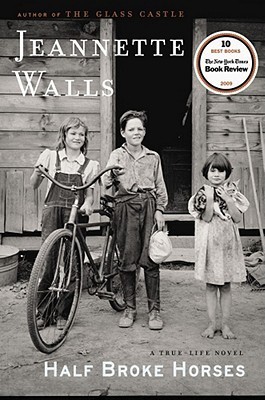
Lily Casey is the protagonist of this “true-life novel,” and the story comes alive through her point of view. Born in 1901, Lily started life in west Texas on a 160 acre ranch that was too small and too dry. She was a hard worker, but she never felt sorry for herself. Her father had been kicked in the head when he was three years old and had a speech impediment. The family moved to New Mexico when the father was released from jail. Lily managed the ranch while her father wrote about Billy the Kid. Her mother was raised to be a lady.
Lily had a life of adventures. She unknowingly married a bigamist. She learned how to break horses, teach school, drive a car, and fly an airplane. She survived a tornado and poverty. She worked as a maid, but was fired for her attitude. To have a baby, she married Jim Smith who was equally hard working and honest, valuable qualities for the couple living in the Dust Bowl during the Depression. They had two children, Rosemary and Little Jim, who practically grew up on horseback until they were sent to boarding schools which neither child liked.
A British investment company bought a large, remote ranch and hired Jim to oversee it. Lily was an equal partner in their marriage. She came up with a plan to build a dam on the property since no one was getting water from wells. Her ingenuity and their hard work turned the ranch into a success. The couple wanted to have their own ranch, but didn’t want a mortgage. They were frugal and creative with money-making schemes.
Rosemary was an artistic, free spirit with the same determination that her mother had. They did not get along well and much of the book deals with their conflicts.
Half Broke Horses is character driven, but also gives what seems like a first hand view of life in the early 1900’s. It is, however, derived from the memories of Rosemary, the author’s mother, and the tales Lily told her daughter. Lily was always trying to teach her children life lessons although they often rebelled. About three-fourths of the way through the book, there is an incident that is dark, and it changes the perspectives and life trajectories of Rosemary and Lily. There are a lot of sad events in this book, but this one threw a pall over it for me. Regardless, as the author refers to it as a “true-life” novel, the reader expects veracity, and anything less would be whitewashing their lives, thereby diminishing the honest relationship already established between the author and the reader.
Rating: 4/5
Category: (Biographical) Historical Fiction
Notes: Written by the granddaughter of the protagonist
Publication: 2009—Scribner
Memorable Lines:
I was leaving the city with about as much stuff as I had arrived with. But I had learned a lot—about myself and other people. Most of those lessons had been hard ones. For example, if people want to steal from you, they get you to trust them first. And what they take from you is not only your money but also your trust.
I realized that in the months since Helen had died, I hadn’t been paying much attention to things like the sunrise, but that old sun had been coming up anyway. It didn’t really care how I felt, it was going to rise and set regardless of whether I noticed it, and if I was going to enjoy it, that was up to me.
…I realized that you can get so used to certain luxuries that you start to think they’re necessities, but when you have to forgo them, you come to see that you don’t need them after all. There was a big difference between needing things and wanting things—though a lot of people had trouble telling the two apart—and at the ranch, I could see, we’d have pretty much everything we’d need but precious little else.
The Blue Ridge Tunnel Mystery–time travel adventure
The Blue Ridge Tunnel Mystery
By MJ Rosewood
Although she debuts as a novelist with The Blue Ridge Tunnel Mystery, MJ Rosewood has a lot of experience to back up this middle grade novel. She is a long-time educator, now retired, who spent childhood summer vacations in the Blue Ridge Mountains and currently makes her home there.
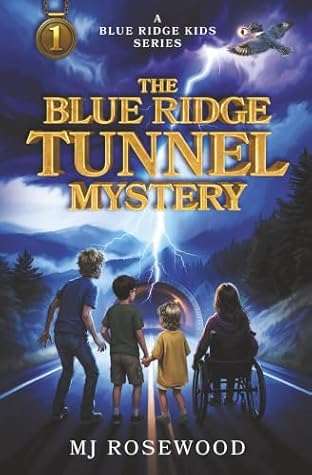
The Blue Ridge Tunnel Mystery is a time travel book starring four children of different ages with individual talents and interests. The oldest at age 11, Tucker, is an inventor and a natural leader. His sister Tessa is proudly ready for second grade. She is deaf and can communicate with sign language, but also has cochlear implants. Cooper, age 10, is a voracious reader, and his sister is Haleigh. She may be wheelchair bound with spinal muscular atrophy, but she doesn’t let her disability slow her down. Together the four make a powerful team.
As summer begins, they are with their sitter Pearl when a strange occurrence transports them back in time. In fact, in this book, they time jump several times, landing at various spots important to U.S. history, and they meet people who will make a critical difference in important events. As we follow their individual travels and witness the development of their characters, two crucial questions arise: how will the children return to their own time period and will they be able to land in the same time as the other children? Along the way, they discover people who have met others from their group, but in a different past time.
All four children are brave and ingenious. More importantly, they have good character and want to help others. Despite the unbelievability of their tale, they encounter adults who are convinced of the truth of their story and want to help them, often in repayment for kindnesses the children have done for them. With dramatic rescues and dangerous missions, The Blue Ridge Tunnel Mystery holds exciting adventures and some mystery. Middle grade students will enjoy the story while learning some history. They will also be exposed to students who may need some assistance, but are nevertheless very capable and independent. I appreciated the author starting each chapter with the year the events happened and which characters were the focus of the chapter.
I received a review copy of this book for free. All opinions expressed are entirely my own.
Rating: 5/5
Category: Middle Grade, Fiction, Historical Fiction
Notes: 1. #1 in the Blue Ridge Kids Series.
2. Includes Author’s Notes that give insight into which parts of the book are accurate historically. The author shares a link to her webpage with more pictures and information about the setting.
3. Also valuable to readers, parents, and teachers are a glossary and a section of activities for further exploration.
4. Recommended for ages 8-12.
Publication: August 30, 2026—MJRW Press
Memorable Lines:
“Why are you feeding an enemy?” Johnny said with a scowl. “Son, we are all human. I would like to think if that young man had been you knocking on someone’s door they would do the same for you.”
Feeling alive, and not thinking about legs that didn’t work or being different, Haleigh and Madeline paddled around the beautiful lake…It was a good reminder, too, that there was more to life than physical limitations. She was truly living out her mom’s favorite saying, “You can’t change what you hide from.” This showed her anything was possible, even finding her way back home.

